A ladder for every screen
Each channel becomes several qualities, from full HD down to what a phone on a weak connection can play. The player picks the best one the connection allows and switches as it changes.

Turn live channels into an adaptive HLS ladder that plays smoothly on any connection, and push live streams straight to the platforms your audience already uses.
Viewers expect your channels on their phones and laptops, on any connection, and on the platforms where they already spend their time. Each channel needs several versions at different qualities so players can switch as the connection changes, and doing that in software for dozens of channels takes racks of servers. Going live on a streaming platform often means one more box and one more workflow.
As live streams from your encoders, over your network or over the internet with SRT or RIST.
The ABR HLS Transcoder turns each channel into a ladder of qualities, all in hardware.
Your CDN or packager delivers the HLS ladder to phones, browsers and smart TVs.
The SDI Encoder pushes a channel straight to streaming platforms over RTMP.
Each channel becomes several qualities, from full HD down to what a phone on a weak connection can play. The player picks the best one the connection allows and switches as it changes.
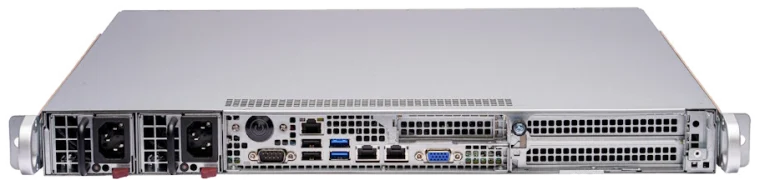
Decode, scaling and every quality are done in hardware on a dedicated media accelerator card. Up to 72 channels per 1 RU server as a four-quality H.264 ladder; the exact number depends on the ladder you choose.
Every quality can be H.264 for the widest reach, or AV1 where your players support it and you want to save bandwidth.
All qualities of a channel are aligned with each other, so players change quality without a stutter.
The SDI Encoder pushes a channel straight to a streaming platform over RTMP or RTMPS, alongside its other outputs.
Every channel is started, stopped and watched through a REST API, so the transcoder fits your own automation.
| Where | Unit | What it does |
|---|---|---|
| Your channels | SDI Encoder | Channels in, and live to platforms over RTMP |
| The ladder | ABR HLS Transcoder | Up to 72 channels per 1 RU server |
| To the audience | Your CDN or packager, delivering the HLS to viewers |
Remote access to a running transcoder first, then a pilot on your own channels, with a written report you keep either way.