Channels in
Over SRT, RIST or UDP, multicast or unicast, with automatic reconnect when an encoder restarts.

The headend holds the line-up and puts it out four ways; the set-top boxes put it on the walls; the transcoder puts it on phones.
Over SRT, RIST or UDP, multicast or unicast, with automatic reconnect when an encoder restarts.
Multicast for the building, HTTP-TS and HLS for phones and tablets, and WebRTC for a browser that needs the picture now.
Channel groups, categories and logos, an M3U playlist, and a live viewer count per channel.
They find the server, pull the channel list and boot straight into the streams on power-up.
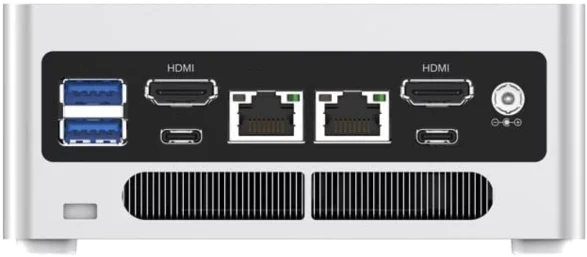
Two independent HDMI outputs up to 4K, each full screen or a 2×2 quad-split: up to eight streams per box, with an IR remote.
The ABR HLS Transcoder turns live MPEG-TS into a keyframe-aligned H.264 or AV1 ladder, every rung in hardware.
Channels to every screen on the network.
Quad-split on two 4K outputs per box, no login needed.
A channel on the screen at power-up.
An HLS ladder for their own packager.
The IPTV Server and the set-top box take H.264 video.
Remote access to a running unit first, then a unit on site for a couple of weeks, with a written report you keep either way.